







Before Anyone Steps Inside: The Fall Prep That Makes a North County Home Feel Cared For
Before your North County home hits the market, these fall preparation steps can improve first impressions, protect the property, and simplify showings.
There is a moment before anyone opens the front door when a home has already begun telling its story.
It happens when someone pulls up to the curb and notices whether the walkway is clear, whether the exterior looks maintained, whether the windows are clean enough to catch the afternoon light, and whether the patio feels ready to use rather than forgotten for the season.
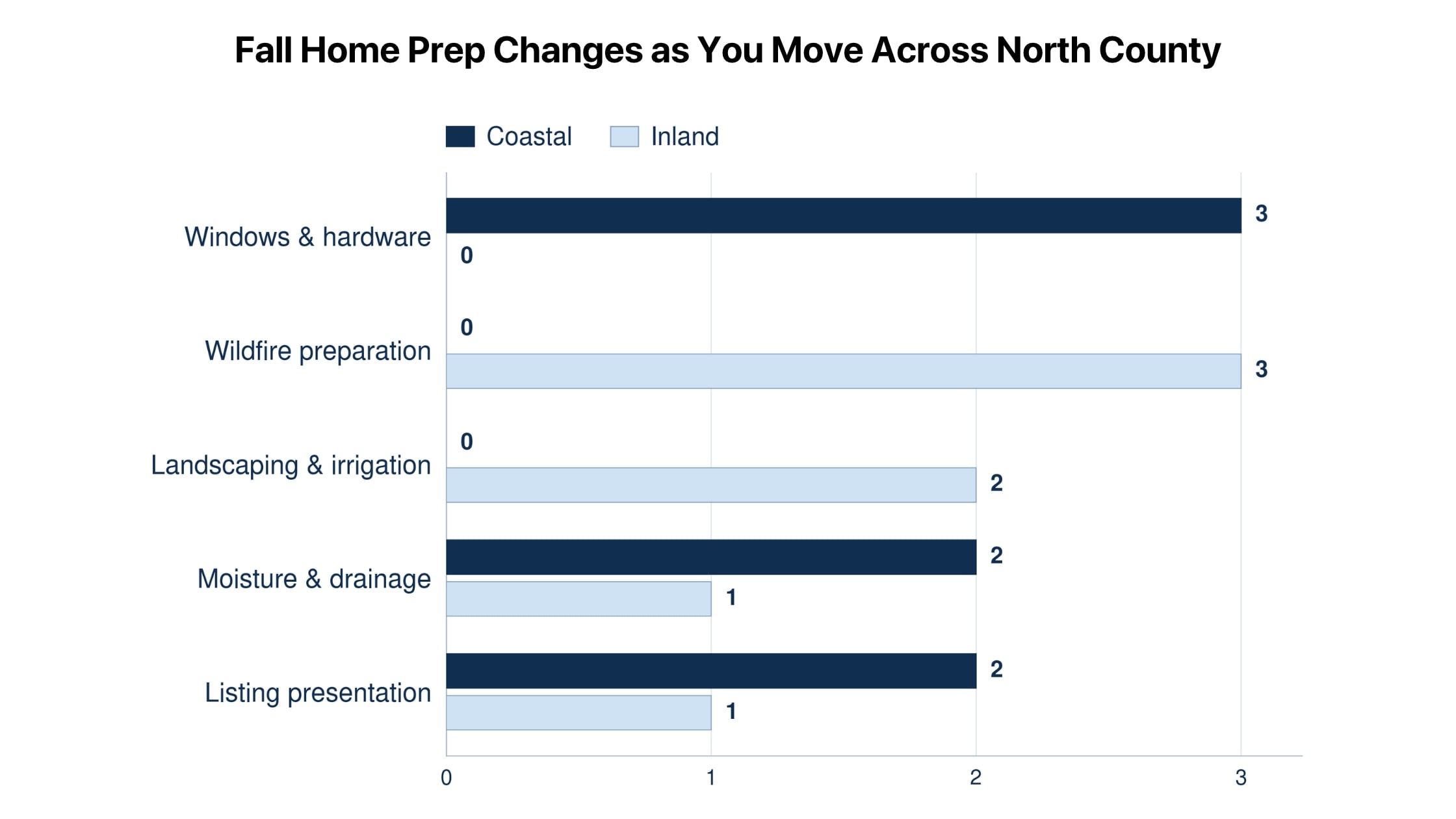
That first impression matters in North County San Diego because fall does not look the same everywhere. A home near the coast may be dealing with marine-layer moisture, salt exposure and cloudy mornings, while a property farther inland may need more attention to dry landscaping, vegetation clearance and outdoor areas that have taken a beating from summer heat. The National Weather Service notes that San Diego’s coastal climate is strongly influenced by the Pacific, with low clouds and fog especially common in coastal areas, while CAL FIRE’s guidance makes vegetation management and defensible space particularly important for homes in applicable fire-prone areas.
For homeowners preparing to sell this fall, the smartest work is not necessarily the biggest renovation.
Fall Is When Small Maintenance Issues Become More Visible
North County may be famous for sunshine, but November is also the beginning of a meaningful seasonal change.
At San Diego International Airport, NOAA’s 1991–2020 climate normals show average precipitation of 0.79 inches in November, increasing to 1.67 inches in December, 1.98 inches in January and 2.20 inches in February. Those figures are long-term climate normals for one coastal San Diego station, not forecasts for this winter, but they illustrate why late fall is a logical time to check drainage, gutters, exterior seals and other areas that may not have received much attention during the dry season.
The City of Carlsbad advises residents to keep gutters, drains and drainage areas clear of leaves and debris, while the City of San Diego recommends regularly cleaning gutters, downspouts and splash pads so water can drain away from the structure. Encinitas also maintains an active stormwater-management program and warns that runoff carries debris and pollutants from yards, roofs, driveways and streets into the storm-drain system.
For a homeowner getting ready to list, that seasonal maintenance has a second benefit: it also improves how the property looks and feels when someone arrives for a showing.
A clean gutter line, swept walkway, clear drain, tidy side yard and downspout that is not surrounded by debris may not be glamorous. But together, they signal care.
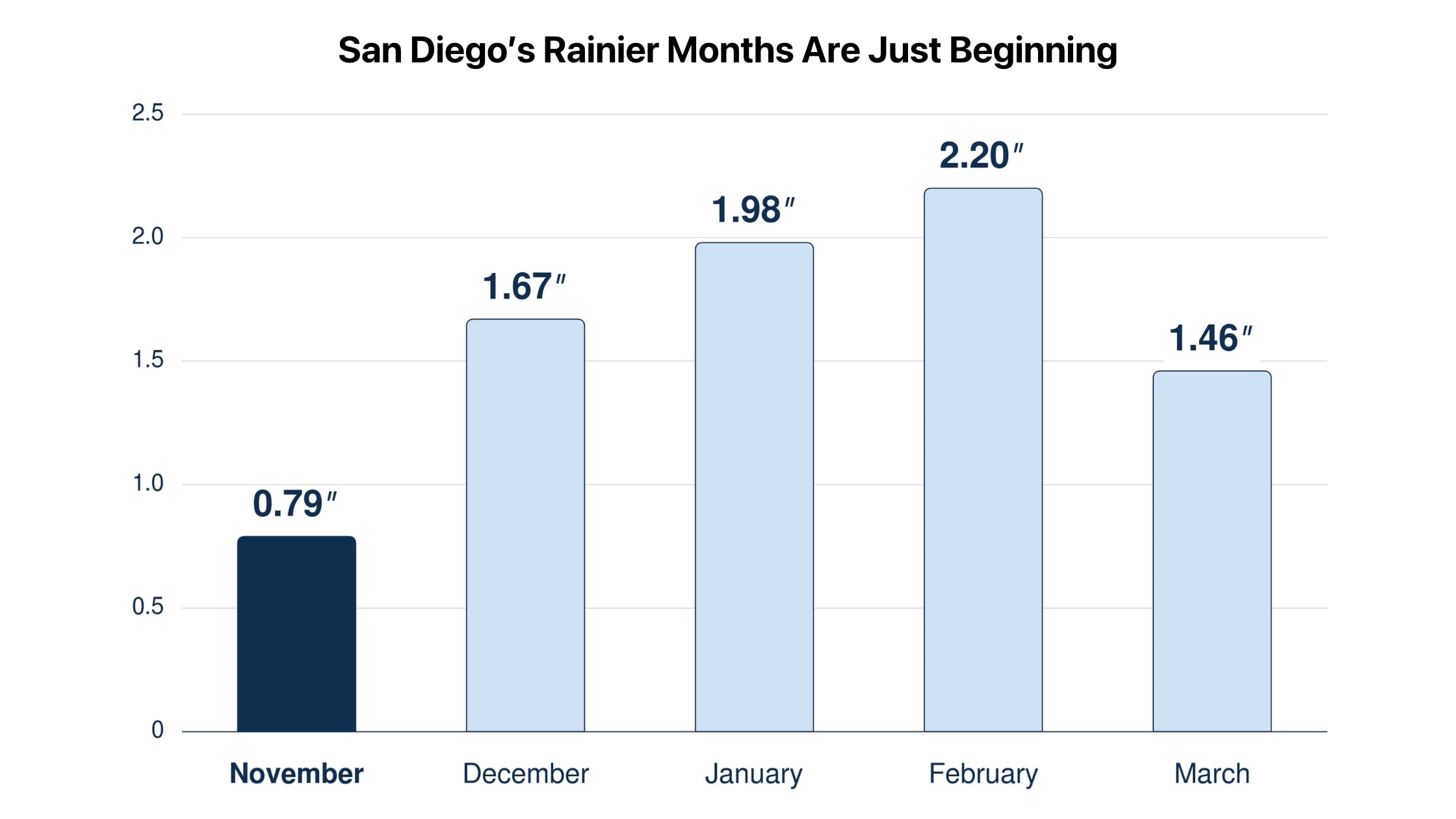
Figures are long-term monthly climate normals, not a 2026–27 rainfall forecast.
The point is not that every seller needs to prepare for a major storm.
It is that November is a useful deadline.
If water pools somewhere it should not, a gutter is overflowing, leaves are clogging a drain or a weathered exterior detail has been ignored since spring, it is better to discover that while preparing the home than during a rainstorm or a showing.
Coastal Homes Need a Different Kind of Once-Over
In Carlsbad, Encinitas, Oceanside and Del Mar, the ocean is part of what makes the location special.
It also influences how a home ages.
National Weather Service climate information for San Diego describes the coastal marine layer as a regular source of low clouds and fog, and NIST research on coastal structures documents how salt exposure and moisture can contribute to corrosion of metals and reinforced materials near the ocean.
That does not mean every coastal home has a corrosion problem.
It means coastal homeowners have good reason to look closely at the details that salt and moisture tend to expose first.
Before photography or showings, walk the exterior and inspect window frames, sliding-door tracks, balcony hardware, gate latches, railings, outdoor light fixtures and other exposed metal components. Clean what is simply dirty or salt-coated. If something is visibly rusted, loose, deteriorated or no longer operating properly, determine whether it needs repair or professional evaluation.
Windows deserve extra attention.
A cloudy marine-layer morning can already make rooms feel dimmer. Dirty glass, worn screens or sliders that do not glide smoothly can make that effect stronger. Cleaning windows inside and out, opening blinds fully and checking that screens and doors operate properly can improve both the presentation and everyday function of the home.
There is also a practical lesson for photography.
Do not assume the brightest listing photos will happen automatically because the property is near the beach. Coastal clouds can change the available light considerably during the morning, so photography should be timed around the home’s actual orientation and the strongest natural light available that day. The National Weather Service notes that coastal low clouds and fog are a recurring feature of San Diego’s marine climate.
That is preparation, not staging magic.
The goal is to show the home at its most representative and inviting.
Inland Properties Have Their Own Fall Checklist
Move east toward San Marcos and Escondido, and the preparation priorities can change.
For properties in areas subject to wildfire-related requirements or with dry vegetation nearby, fall is a sensible time to look carefully at landscaping, debris and the spaces immediately around the structure.
CAL FIRE recommends removing dead plants, leaves, pine needles and other debris, including material collected on roofs, decks, porches and in gutters. Its defensible-space guidance also emphasizes keeping the first five feet around structures as resistant to ember ignition as practical and reducing potential fuels farther from the home. State law requires 100 feet of defensible space for certain properties in applicable areas, or to the property line when the parcel is smaller.
Not every San Marcos or Escondido home is subject to the same fire-zone rules, so sellers should not make assumptions based simply on the city name. CAL FIRE and the California Department of Forestry and Fire Protection maintain official hazard and defensible-space resources, and requirements depend on the property’s actual location and classification.
For a listing, this work also affects presentation.
Dead leaves piled beneath a deck, dry weeds along a fence line, neglected planter beds or stored combustibles beside the house can make a property feel less maintained before anyone considers the safety implications.
The opposite is also true.
Clean pathways, trimmed vegetation, usable outdoor seating areas and landscaping that looks intentional can make the property feel ready for its next owner.
What People Notice Before They Know They Are Noticing It
Most homeowners become accustomed to their own house. The sticky gate is normal because you know how to lift it slightly. The dim hallway does not bother you because you know where the switch is.
The shoes beside the garage door have been there for months, so eventually you stop seeing them.
Someone visiting for the first time sees all of it. That is why one of the most useful pre-listing exercises is to leave your home, walk to the sidewalk, and then come back through the property as though you have never been there before. Start with what is visible before you reach the door.
Is the address easy to see? Is the walkway clear? Is the front door clean? Does the porch light work? Are there dead plants, cobwebs, overflowing planters or packages stacked near the entry? Then walk inside and notice the air before anything else.
Strong fragrances are not a substitute for a clean home. Pet odors, cooking odors, damp towels, closed-up rooms and heavily scented plug-ins can all become part of someone’s first impression. In many cases, cleaning the source, airing out the home and keeping fragrance subtle is more effective than attempting to cover one smell with another. Then look at light. Open the blinds. Replace failed bulbs. Clean the glass. Remove anything blocking a window unnecessarily. Finally, look at how much of the home is actually visible.
A beautifully maintained kitchen can still feel crowded if every countertop is covered. A generous garage can feel small when storage reaches the door. A patio can disappear under stacked furniture and unused equipment.
This is one reason staging remains relevant. In the National Association of Realtors’ 2025 Profile of Home Staging, 83% of buyers’ agents said staging made it easier for a buyer to visualize the property as a future home. The survey also found the living room, primary bedroom and dining room were among the spaces most commonly staged by sellers’ agents. That does not mean every home needs rented furniture or a full design overhaul.
Sometimes staging is simply editing. Remove what distracts. Keep what helps explain the room.
The Work to Prioritize Before Photography and Showings
The easiest way to get overwhelmed before listing a home is to treat every project as equally urgent. It is not. Start with maintenance and safety items that affect the property itself. Clear drainage paths and gutters. Address obvious leaks or damaged exterior components. Replace failed bulbs. Repair doors, gates, windows and sliders that do not operate correctly. If the property falls within an area where defensible-space or other fire-related obligations apply, confirm those requirements early rather than waiting until escrow. CAL FIRE notes that sellers of certain properties in high or very high fire-hazard severity zones need documentation of a compliant defensible-space inspection. Next, clean deeply. Windows, floors, baseboards, kitchens, bathrooms, patios, thresholds and entryways carry more visual weight than many homeowners realize. Then declutter.
You are not trying to erase every sign that someone lives there. You are trying to make the architecture and usable space easier to see. After that, focus on presentation.
Arrange furniture so someone can move comfortably through each room. Remove bulky pieces that make circulation awkward. Give patios and balconies a clear purpose. If a dining area has become an office-storage-laundry hybrid, consider restoring it to a recognizable primary function for photos and showings. Finally, think about the listing photos.
Photography should capture the home as it actually presents, not create an unrealistic version of it. California’s required Real Estate Transfer Disclosure Statement separately addresses the physical condition of many residential properties and is expressly described as a disclosure, not a substitute for inspections. Sellers should discuss the disclosure package and any property-specific obligations with their real estate professional rather than assuming cosmetic preparation replaces disclosure. A clean window is presentation. A concealed defect is something entirely different. That distinction matters.
Bottom Line
Preparing a home for sale is about more than making it look good in photos. It's about helping potential buyers recognize the care, comfort, and lifestyle a property has to offer from the moment they arrive.
Across North County San Diego, that preparation looks different for every home. Coastal properties may need extra attention to salt exposure, windows, and outdoor living spaces, while inland homes may benefit from refreshed landscaping and seasonal maintenance. Knowing which improvements matter most can save sellers time, money, and unnecessary stress.
That's where working with an experienced local real estate team makes a difference.
Led by Alan Shafran, with more than 39 years of real estate experience, Shafran Realty Group brings deep North County market knowledge, personalized guidance, and a strategic approach to preparing and marketing homes. Recognized by RealTrends Verified as No. 1 in Carlsbad, No. 20 in California, and No. 51 nationwide by 2025 sales volume, our team understands how to highlight what makes each property stand out.
Check out this article next